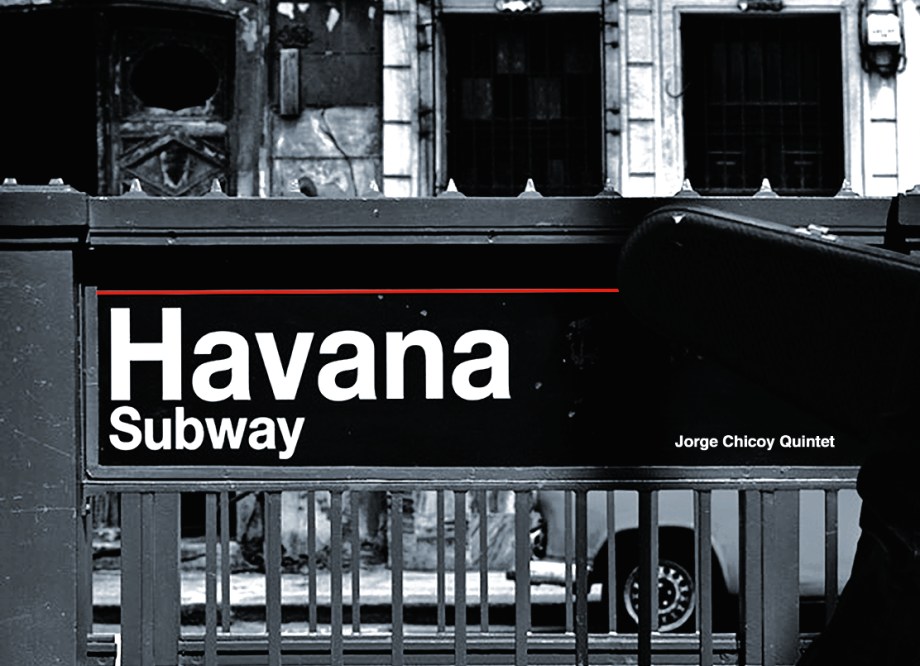
Latin jazz is the sugar in your coffee, the honey in your tea. With roots in the Carribean, and in the barrios of New York, Miami and elsewhere, the music warms the soul but also tickles the ear and facilitates the flow of blood to … Continue reading HAVANA SUBWAY: liner notes
NEW MUSIC SERIES: T.J. English and His Latin Jazz Explosion We are thrilled to have as an opening act for Dangerous Rhythms: T.J. English and His Latin Jazz Explosion the multi-Grammy nominee Bobby Sanabria & Sexteto Ibiano. Recently, T.J. caught up with Bobby to discuss … Continue reading DANGEROUS RHYTHMS: Q & A with Bobby Sanabria
In my career writing about organized crime, it could be said, and has been said, that I have acquired some unusual items. Case in point: Mad Dog’s scrapbook. Over the years, I became friendly with the notorious gangster Joseph “Mad Dog” Sullivan, referred to by … Continue reading Mad Dog’s scrapbook
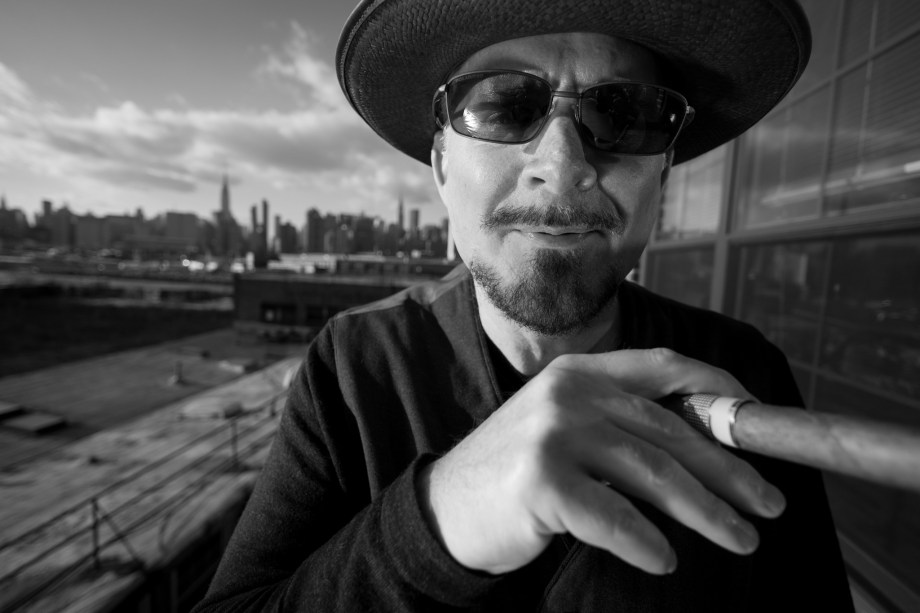
Author T.J. English recently sat for a series of photos with photographer Ilya Yamasaki, who is of Japanese, Brazilian and American descent. The photos were taken in Greenpoint, Brooklyn.
Author T.J. English recently sat for a series of photos with photographer Ilya Yamasaki, who is of Japanese, Brazilian and American descent. The photos were taken in Greenpoint, Brooklyn.
El Hijo Pródigo (the Prodigal Son) * This article originally appeared online at Konch Magazine (ishmaelreedpub.com) This is the story of a notorious Cuban American gangster named Jose Miguel Battle. In Cuba, his last name was spelled Batlle and pronounced Bat-ye, but once in the … Continue reading LETTER FROM MADRID: T.J. English
Mad Dog Sullivan has passed away in prison after a long bout with cancer. Some will not be sorry to see him go. He was a professional contract killer for the Mob who may have whacked over 20 people, mostly other gangsters. He is also … Continue reading Death of a Mad Dog
This week former FBI agent Robert Fitzpatrick goes before a federal judge to be sentenced for the crimes of perjury and obstruction of justice, stemming from his testimony at the trial of gangster James “Whitey” Bulger. He’s facing a sentence that could, at his age, put him away for life. He has pleaded guilty to crimes, I believe, that he didn’t commit. The expense of defending himself in federal court, and his declining health, led him to throw himself on the mercy of the court. If you’ve read the first two installments of this series, you know the details of the case. In this final installment, I’m posting a letter that I’ve written to the judge in hopes that Fitzpatrick will not be sentenced to time in prison for what has been, clearly, a vendetta on the part of the U.S Attorney’s Office in the District of Massachusetts.
——
Honorable F. Dennis Saylor IV United States District Court Judge One Courthouse Way Boston, MA 02210
Dear Judge Saylor:
I have known Bob Fitzpatrick now for almost a decade. It was the Whitey Bulger scandal that brought us together, me as a journalist/author and Bob as a potential source of information, someone who was there in the Boston FBI office during some of the years that Bulger was on the street committing horrific crimes.
As you know, the Bulger story has been an incredibly complicated, multi-layered saga that involved not only the brutal crimes of a degenerate gangster, but also the official corruption within the criminal justice system that allowed the man to flourish as a criminal for so long.
Very few people who served in the criminal justice system during ‘the Bulger Years’ and were in the orbit of the Bulger story come out of it looking good. During those years, many looked the other way or stuck their head in the sand while Bulger was being protected by SA John Connolly, SA John Morris and many others all the way up to OC Strike Force Chief Jeremiah O’Sullivan.
While attempting to write about this, to make sense of what happened, there were very few people willing to talk openly or frankly about what took place. Bob Fitzpatrick was the exception. He was as shocked and disgusted as anyone about what had happened in Boston and, I think, felt great remorse that any of this had taken place on his watch. He was conflicted and maybe even haunted by those years and had a strong desire to set the record straight, as he knew it. I never heard Bob use the word ‘whistleblower’ or anything like that in the many years we discussed the case. If anything, he felt guilty for not having done more to stop it while he was in Boston, and he now felt a moral obligation to help tell the true story to the extent that he could.
I’ve gotten to know Bob well over the last seven or eight years. We’ve had many late night discussions about the Bulger years and, in some cases, life in general. We both share having had a Catholic upbringing, both schooled by the Jesuits. We share an Irish Catholic ancestry. I’ve traveled to Bob’s home in Rhode Island, slept overnight in his basement, and met his wife Jane and his two daughters. Occasionally, I’ve met them all where I live in New York City. Over time, my relationship with Bob moved beyond that of a ‘source’ to being a true friend.
Bob Fitzpatrick is one of the finest and most moral and ethical people I know. Since he was charged by the U.S. Attorney’s Office in Massachusetts, I’ve seen the stress and anguish it has brought into his world, particularly with his family. Personally, I think the vendetta against Fitzpatrick has been a travesty. I wrote about the situation in a book I published – Where the Bodies Were Buried: Whitey Bulger and the World That Made Him (William Morrow: 2015), how Bob was excoriated on the witness stand at the Bulger trial. The reasons for his treatment by the prosecutors strike deep at the core of Bulger scandal. I won’t go into that here, except to say that the story Bob has been telling about the Bulger years is a rebuke to many in the system, and the system, for some time now, has had a vested interest in attempting to discredit Bob Fitzpatrick.
Bob Fitzpatrick is not a criminal. He is a good man and does not deserve this. I hope that in sentencing this man you will take into account the totality of his life as a long-time public servant with an exemplary record, a father, an ethical human being who had to navigate his way through one of the most treacherous moral quagmires in the recent history of the Boston FBI and criminal justice system in New England. That Bob Fitzpatrick would be the one going off to prison at the end of all this would be a further stain on the system. Please, Judge Saylor, do not let that happen.
Let’s Make a Deal In Beantown, the indictment and upcoming trial of retired FBI agent Robert Fitzpatrick on perjury charges is a vindictive prosecution designed to intimidate potential whistleblowers and rewrite history. By T.J. English In November 2015, six months after former FBI agent Robert … Continue reading BULLSHIT IN BOSTON #2
A few years ago, a friend of mine informed me that a young activist and writer had struck up a relationship with James McElroy, a feared hit man for the Westies. Having devoted a number of years to researching and writing a book about the Westies, I was curious.
McElroy was one of the most notorious members of that violent crew. He was not known for his brains; he was the gang’s muscle. Jimmy Mac, as he was known to his friends and criminal associates, probably had administered more beatings and killed more people than he could remember. In the universe of would-be, could-be and wanna-be gangsters, McElroy was OG through and through.
For those who might not know, the Westies were a hyper-violent Irish American gang that existed in Hell’s Kitchen, on the West Side of Manhattan, from the mid-1970s to the late-1980s, until they were put out of business in a big federal racketeering trial. While writing the book The Westies, which was published in 1990, I had attempted to interview Jimmy Mac. I knew it was highly unlikely that he or his lawyer would give their consent. McElroy was incarcerated at the time and in the midst of the Westies trial, which lasted six months from September 1988 and into 1989. Eventually, McElroy, along with eight other defendants, was convicted. He was given a sentence of 75 years to life in prison, with no opportunity of parole.
Much of what I knew about Jimmy Mac came from courtroom testimony (gang member Billy Beattie, in particular, had a lot to say about McElroy on the witness stand, as did an old-time neighborhood loanshark turned witness named Tony Lucich). But most of what I knew came from extensive interviews with Mickey Featherstone, the No. 2 man in the gang, who admired Jimmy Mac but also realized that he was a very dangerous and capable killer.
Most of what I knew about McElroy was second hand, which is why I was so intrigued to hear that a writer had spent time visiting him in prison and was planning to write about it. And there were a couple other things that added to the intrigue – the writer in question was a woman, and she was African American.
From what I knew of McElroy, he was likely an old school misogynist and possibly a racist as well.
Walidah Imarisha is the writer’s name, and the project she was working on is now a book called Angels With Dirty Faces, published last month by AK Press and the Institute for Anarchist Studies (the title of the book comes from the iconic Jimmy Cagney movie, first released in 1938).
I met Walidah about a year and a half before the book was officially published. In October 2014, we were both invited to speak at the Howard Zinn Book Fair held in San Francisco and organized by the esteemed activist and author James Tracy.
Meeting of the minds: Walidah Imarisha and T.J. English at the Howard Zinn Book Fair 2014, in San Francisco.
When Walidah first walked into the bookstore where the Zinn event organizers were holding an opening-day reception, I did a double take. She had a prodigious Angela Davis-style Afro and a big warm smile, and she was wearing a dress patterned with Star Wars characters. The idea of this woman sitting down with McElroy of the Westies was causing the synapses in the brain to snap, crackle and pop.
That night, Walidah gave me a copy of her collected poems, published as a book entitled Scars/Stars. I read the poems. They were very good, filled with pain, passion and insight.
A few months later, Walidah sent me a rough copy of her unfinished manuscript for Angels With Dirty Faces. I read about her relationship with McElroy, someone I thought I knew a fair amount about. But there was so much more about the man that Walidah was able to get not only by spending time with Jimmy Mac, but also by placing his life of crime in a larger context of incarceration, the street, and the vicious cycle at the heart of criminal justice in the U.S.A.
Over numerous prison visits, Walidah was able to get things out of this hardened criminal that I likely never would have. Her being a woman and African American no doubt cast their encounters in a particular light. I’m not saying this gave Walidah any particular advantage or disadvantage, but it would have altered McElroy’s need to size up his inquisitor according to the dictates of male competitiveness, or male insecurity, and perhaps let down his guard. Walidah was able to get beneath the hitman’s misogyny and racial tribalism. After all, it was Sundiata Acoli, a former member of The Black Liberation Army, who first introduced Walidah to Jimmy Mac in the prison visiting room. While incarcerated, the veteran black liberationist and the Irish American gangster had become close friends.
Anyone who has read The Westies, or taken an interest in the crazy, self-destructive trajectory of the gang’s legend needs to pick up a copy of Angels With Dirty Faces. Walidah’s portrait of McElroy fills in a lot of blanks and fleshes out aspects of the gang’s psychosis in ways that will deepen your general understanding of crime and punishment in America.
Activist, poet, educator and author.
The sections of Walidah’s book that deal with Jimmy Mac are fascinating, but I would be doing the book a disservice if I left it there. Angels With Dirty Faces actually intertwines three separate narratives that all relate to the subject of incarceration and criminal justice. There is the story of Walidah’s own adopted brother, Kakamia, who is serving an extended sentence on murder charges. And then there’s Walidah’s own highly personal story of her experiences with sexual assault by someone she knew and trusted. In various ways, all three of these narratives reflect aspects of compulsive criminality, personal responsibility, societal accountability, and the concept of redemption.
To learn more about the remarkable career of Walidah Imarisha and her tireless efforts as an educator, activist, poet, author, Afro-futurist, and all-around badass, visit her website at: www.walidah.com





 This week former FBI agent Robert Fitzpatrick goes before a federal judge to be sentenced for the crimes of perjury and obstruction of justice, stemming from his testimony at the trial of gangster James “Whitey” Bulger. He’s facing a sentence that could, at his age, put him away for life. He has pleaded guilty to crimes, I believe, that he didn’t commit. The expense of defending himself in federal court, and his declining health, led him to throw himself on the mercy of the court. If you’ve read the first two installments of this series, you know the details of the case. In this final installment, I’m posting a letter that I’ve written to the judge in hopes that Fitzpatrick will not be sentenced to time in prison for what has been, clearly, a vendetta on the part of the U.S Attorney’s Office in the District of Massachusetts.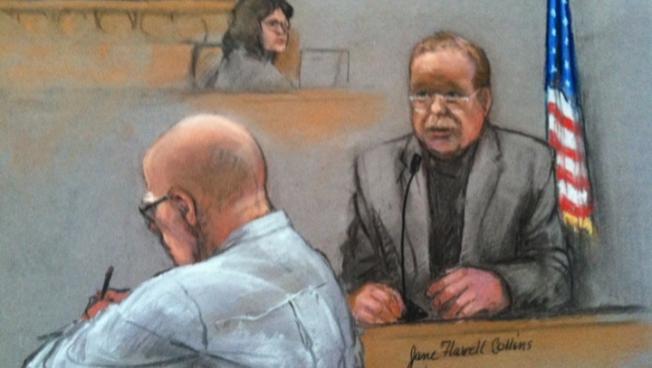
 curious.

 streetlogicblog.com